
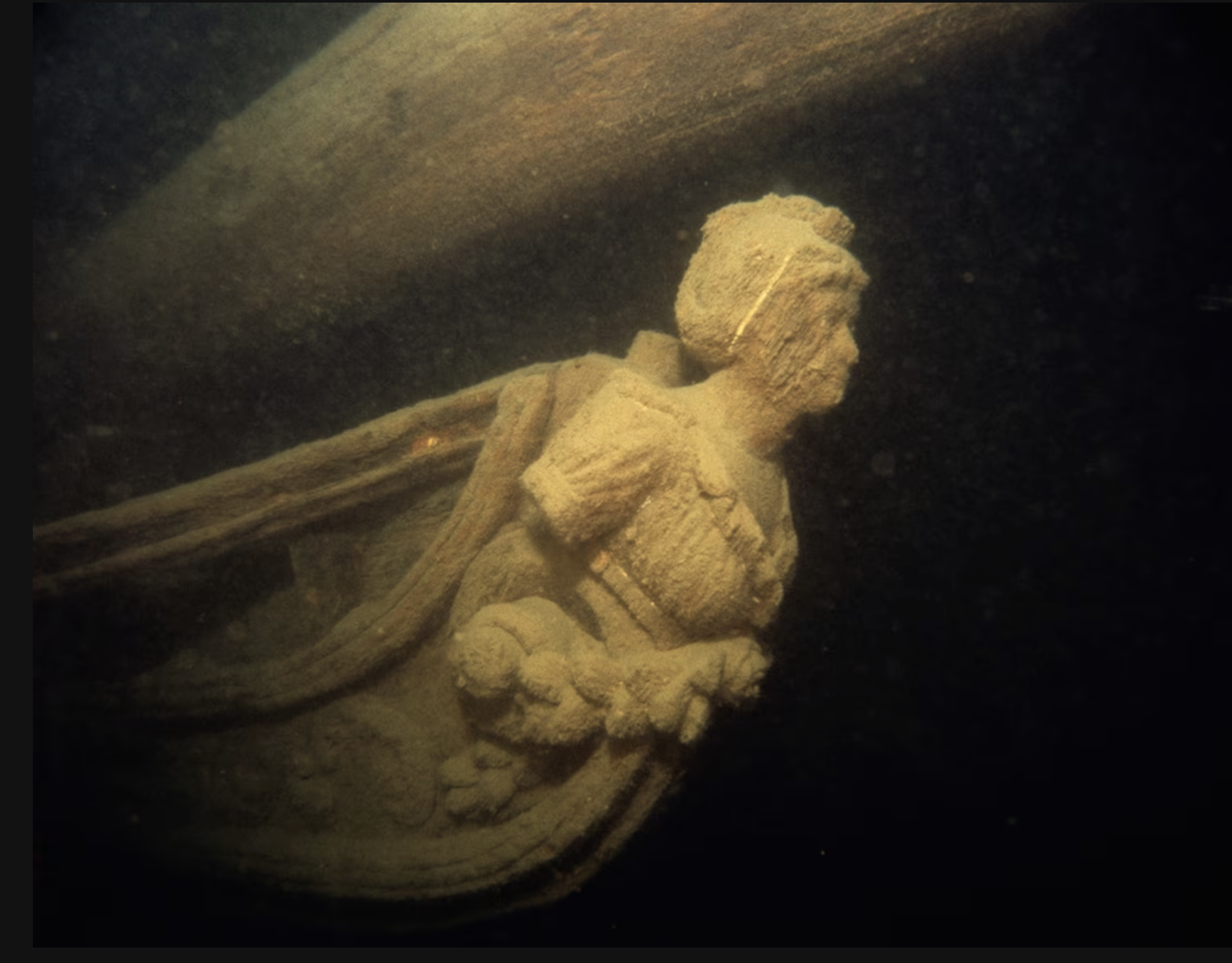
"This is a personal recollection from my involvement in early Hamilton and Scourge documentation efforts.”
Over twenty years ago, I was involved in a serious conservation effort to film, document, and survey the wrecks of Hamilton and Scourge, resting in roughly 290 feet of freshwater near Hamilton, Ontario.
This was not some loose collection of weekend cowboys with scooters and cameras. This was a coordinated effort led by Elaine Wyatt, who pulled together people and organizations that actually cared about the wrecks.
The project involved people from Save Ontario Shipwrecks, Preserve Our Wrecks, Northern Tech Diver, and a long list of divers and supporters, including myself as a support diver. The dive team included Dan Mackay as lead diver, along with Kevin Ripley, Doug Smeaton, Rob Deluca, and others.
There were also photographers and videographers involved, including Tom Wilson and Vlada Dekina. With my own camera skills improving at the time, we genuinely believed we had a chance to do something worthwhile.
This was not just a dive. It was meant to be documentation. Survey work. Real conservation.
Dan and I had both been trained by Parks Canada to do archaeological survey work. I was still serving in the military at the time, and Dan had retired about a decade earlier, so between the two of us there was plenty of familiarity with planning, discipline, procedures, and working around government systems.
Elaine had managed to bring in or connect with a remarkable list of interested parties: the Coast Guard, Parks Canada, Shark Marine, the Hamilton Museum, which holds responsibility for the wrecks, and many others ranging from salvage interests to the Canadian Navy.
On paper, it looked like the right people were finally in the same room.
And then, because this is shipwreck politics, the backdoor shenanigans started.
A competing training agency was hovering in the background, quietly working angles and apparently believing they were the ones who should get the job. While we were trying to promote and organize a conservation-minded expedition at our own cost, others were playing the usual game: access, control, credit, and the possibility of paid work.
Even more surprising, while all this official talk was happening, Ralph and the boys from Oshawa were already sneak-diving the wrecks. They even supplied footage to Shark Marine, who were also working toward getting paid expedition work out of the project.
So here we were, trying to do things properly, and the usual circus had already set up behind the tent.
In the end, Parks Canada refused to allow anyone to dive the site.
That is, until television and Mike Fletcher entered the picture.
Suddenly, the rules became flexible.
First came the ROV work. And before long, in true “underwater documentary” fashion, the ROV was driven into a window of one of the wrecks, damaging the window area. Today, the damage is often blamed on mussels.
More on that convenient little detail later.
After that came the proposal for commercial diver work — something that had previously been answered with a very clear hell no when others raised it.
But now?
Now it was apparently acceptable.
A classic case of do as I say, not as I do.
They decided to test the tethered-diver approach on another local wreck known as the Tiller. Within minutes, the exact concern that had been raised years earlier appeared on camera: Mike’s tether wrapped around the bowsprit.
This was not some theoretical risk. It happened on television. Broadcast for everyone to see. The very mistakes and concerns that had been identified more than a decade earlier played out exactly as predicted.
But somehow, the people who warned about it were the problem.
One of the major concerns from researchers and conservation-minded divers at the time was the spread and impact of invasive mussels. We knew these wrecks were at risk. We knew mussel colonization could eventually obscure details, add weight, trap sediment, and accelerate deterioration.
That concern was brushed aside.
The “experts” had every excuse ready. Everyone had a reason why it was not urgent, why nothing needed to be done, why access should be restricted, why the right people were not the right people unless there was a camera crew, a contract, or a paycheque attached.
Now we are looking at wrecks with heavy mussel coverage, damaged features, and portions of the structures beginning to fail.
The data we could have collected then is gone forever.
Not because of treasure hunters.
Not because of souvenir divers stealing bits of history.
Not because of anchors being dropped through hulls.
But because the system that controlled access preferred politics, control, and paid opportunity over timely documentation.
We could have produced updated records. We could have captured detail that is now buried under mussels or lost to collapse. We could have created something useful for historians, archaeologists, divers, museums, and the public.
Instead, the opportunity was squandered.
And the worst part?
This was not a mystery. This was not unpredictable. This was not some tragic act of nature that nobody saw coming.
We saw it coming.
We said it out loud.
And we were ignored.
That, more than anything, is the part that still stings.
Because shipwreck conservation should be about the wrecks. It should be about preserving history, documenting what remains, and making sure future generations have access to the story.
But too often, it becomes about control, credit, access, ego, funding, and who gets to stand closest to the camera.
Yes, we really are that shitty to each other in the chase for fame.
And the wrecks pay the price.
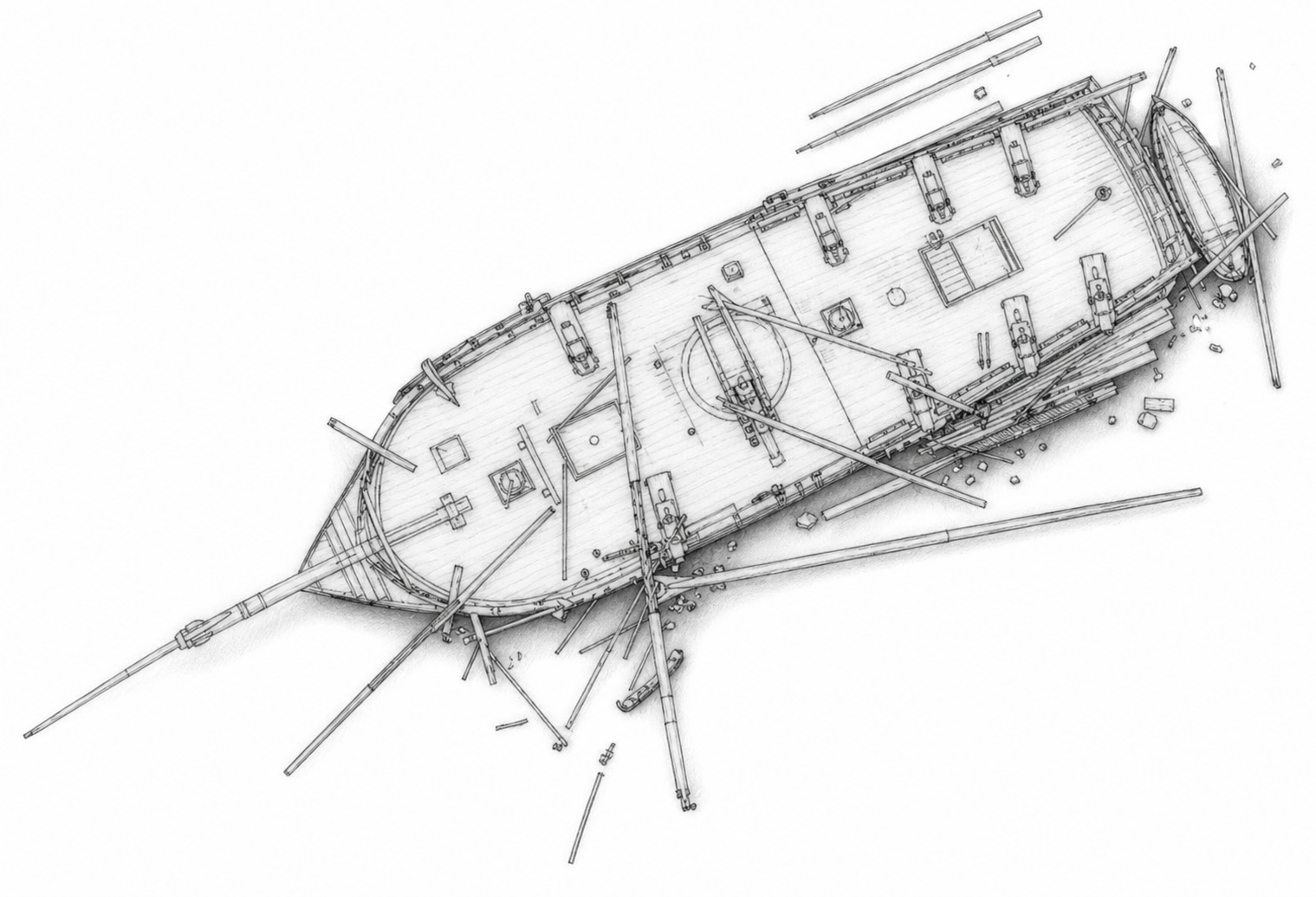
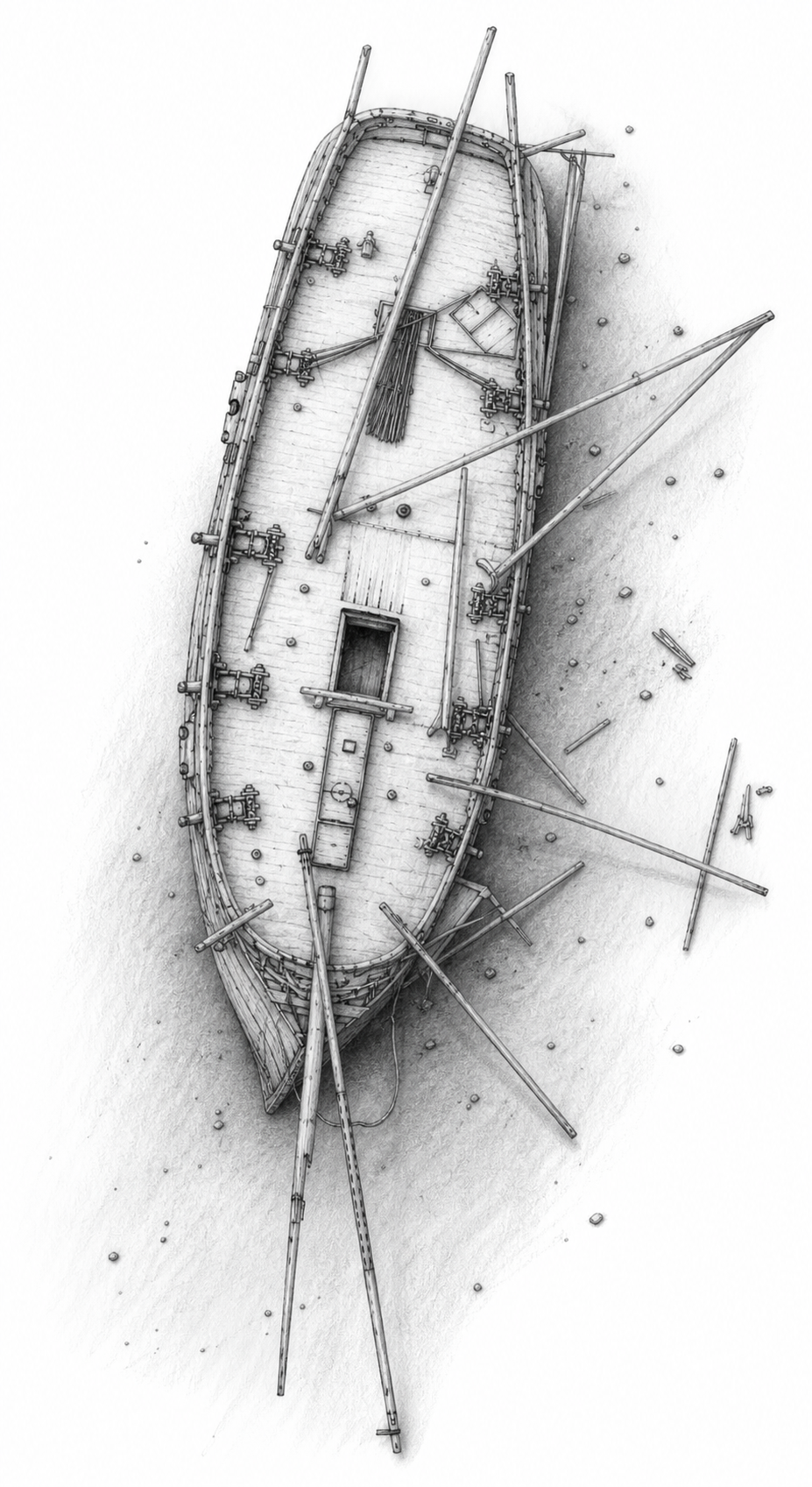
USS HAMITON(R) AND USS SCOURGE cc2026 Tom Rutledge